CENTRE FOR CLIMATE STUDIES

- People
- Study
- Research
- News & Events
- About
- Internal
Our Programmes

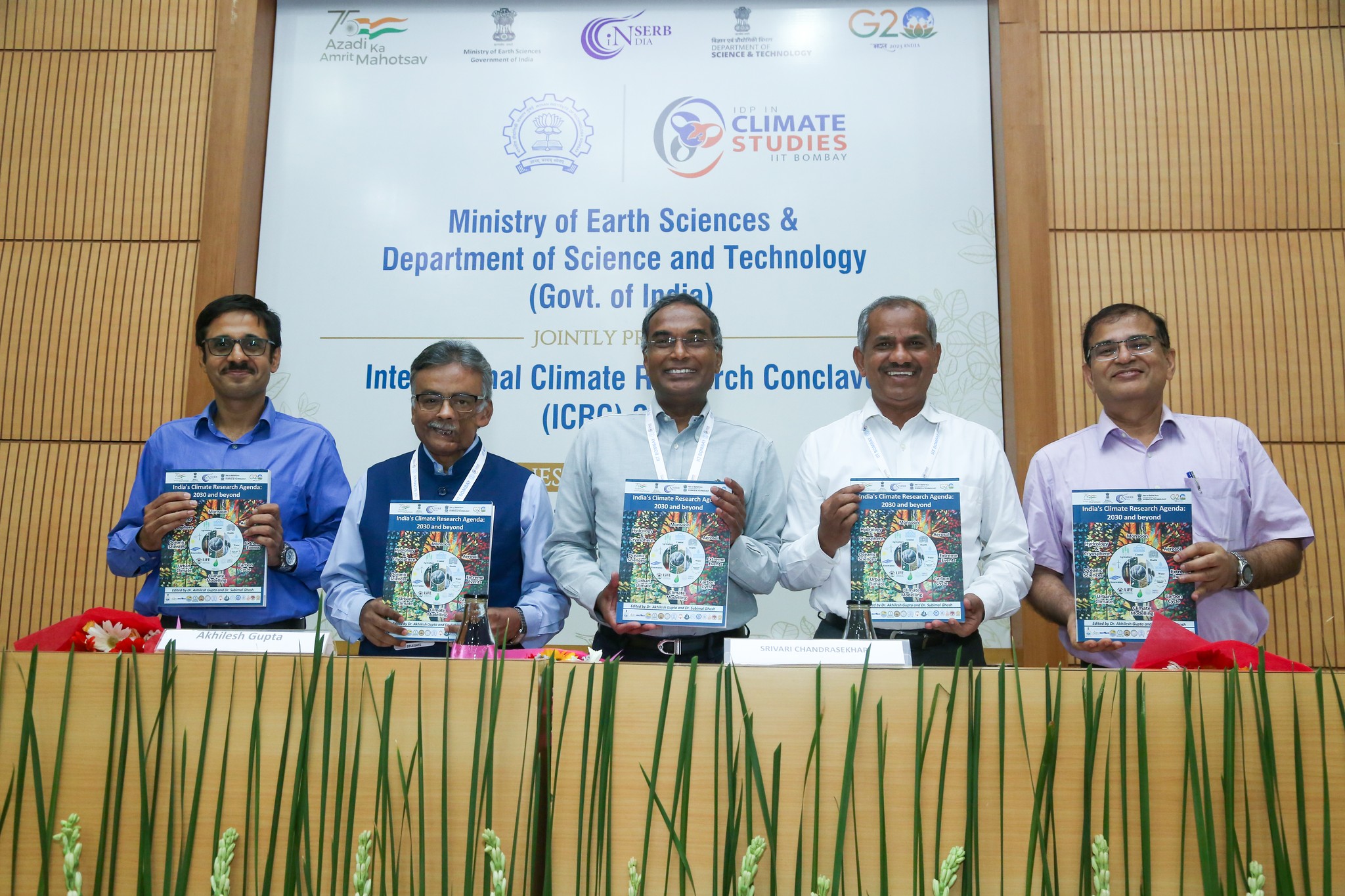
Explore how CCS is redefining the fight against climate change through bold innovation and impactful research. With sustainability at our core, we bring together a community of visionary thinkers and collaborators dedicated to building a resilient, thriving future for our planet.
Seminar
Climate Pathway Design: High-Risk Futures and Distributional Implications: Dr. Mel George
Presenter
Mel George is a Graduate Teaching Faculty member at the Center for Global Sustainability, University of Maryland, and an alumnus of IIT Bombay (ESE, ’09). His research uses integrated assessment models to study the equity, justice, and distributional dimensions of climate mitigation, with a focus on India and the Global South. He leads the high-emissions marker scenario development for CMIP7 ScenarioMIP and is founding co-chair of the IAMC Scientific Working Group on Equity, Justice and Human Development, in addition to lead modeler roles in the NGFS scenarios and IAM consortium projects. Before his academic career, he spent nine years as a government officer, including a deputation to India’s Ministry of Petroleum.
Abstract
Integrated assessment models are used to construct global reference scenarios and evaluate the consequences of alternative mitigation pathways. This presentation draws on recent research in both areas, focusing on the development of a new high-emissions marker for CMIP7 and the regional and household distributional consequences of mitigation strategies.
The presentation begins with H3, the marker for CMIP7’s high-emissions scenario, whose development I led. H3 takes over the high-end reference role associated with RCP8.5 for more than a decade in climate and impacts research. It reaches approximately 6.5 W/m² of radiative forcing and 3.4°C of warming by the end of the century, below the corresponding CMIP6 marker and SSP5-8.5. H3 represents a high-risk future shaped by substantial warming, fragmented development, persistent vulnerability, and limited adaptive capacity. It provides a high-end reference scenario in which climate hazards interact with socioeconomic conditions to determine risk.
The second part examines how mitigation pathway design shapes distributional outcomes across regions and households. Cost-optimal and technology-led strategies exacerbate tensions among energy equity, sustainability, and security, with developing regions experiencing greater equity losses. Pathways that reduce energy demand among affluent populations alleviate these tensions across developed and developing regions. The household consequences are particularly pronounced in India. Under cost-optimal pathways, rising modern-fuel prices increase reliance on traditional biomass among the poorest income groups, reversing part of the clean-cooking transition that mitigation is intended to support. Demand-side pathways reduce energy burdens and produce a more progressive distribution of mitigation outcomes across households.
For India and the wider Global South, these findings point to two priorities. High-end climate assessments must account for the socioeconomic conditions that shape vulnerability and adaptive capacity. Evaluations of mitigation pathways must consider emissions reductions alongside consequences for energy access, household welfare, and existing development inequalities.
Date and Time
21 July 14:30 – 15:30
Place
Civil Conference Room, Ground Floor
